GEO vs SEO: rankings, AI citations and measurable growth
SEO helps people discover your pages in search results. GEO focuses on making your brand and content discoverable in AI-generated answers. They overlap: earning a blue-link ranking and earning an AI citation are different outcomes, but both depend on accessible, useful and trustworthy information.
By Ahtasham Sifat · Senior SEO Specialist & AEO Strategist
What is the difference between GEO and SEO?
Search Engine Optimization improves a website’s visibility in organic search. Generative Engine Optimization is the practice of improving how content is discovered, referenced and represented by generative search systems. Traditional results send people to a page; an AI answer may summarize several pages and display selected source links without requiring a visit.
“Blue links versus AI citations” is a useful contrast, not a strict boundary. Google AI Overviews are part of Google Search. Google explicitly says existing SEO best practices apply to its AI features, with no separate optimization requirements. Other AI platforms use their own retrieval and citation systems, so a tactic or result from one platform should not be assumed to transfer to another.
| Dimension | SEO | GEO |
|---|---|---|
| Primary goal | Earn visibility in organic search results, including traditional blue links. | Earn relevant mentions, source citations and referrals in AI-generated answers. |
| How discovery works | A search engine crawls, indexes and ranks pages for a query. | An AI search system can retrieve multiple sources and synthesize an answer; retrieval varies by platform. |
| Content approach | Match search intent with useful, comprehensive pages and a clear internal linking structure. | Keep those foundations, then make facts, entities, evidence and direct answers easy to extract and attribute. |
| Technical foundation | Crawlability, indexability, canonical URLs, accessible HTML and relevant structured data. | The same foundations for Google AI features; no special AI schema or new machine-readable file is required. |
| Authority | Relevant links, original expertise and trustworthy information support organic visibility. | Clear authorship, reliable sources and consistent entity information help make content a credible source; they do not guarantee selection. |
| Measurement | Organic clicks, impressions, rankings, conversions and revenue. | Observed citations and cited pages by platform, tracked AI referrals, assisted conversions and orders. |
| Main limitation | Rankings fluctuate and do not guarantee traffic or sales. | Answers vary by prompt and platform; a citation is not a visit, endorsement or sale. |
Technical requirements: foundations before shortcuts
For Google AI Overviews and AI Mode, a page must be indexed and eligible to appear with a snippet to qualify as a supporting link. Check crawl access, rendering, canonicalization and indexation before rewriting content. Important information should be available in text, internal links should make related pages discoverable, and structured data should match visible content.
There is no special “GEO schema,” required AI text file or guaranteed citation formula for Google. Use appropriate Article, Product or Organization markup where it describes the page accurately. For other platforms, review their documented crawler controls separately rather than assuming Google’s eligibility rules apply everywhere.
Technical SEO audits and indexation fixes establish this foundation; semantic SEO and content strategy organize the answerable topics on top of it.
Content strategy: make evidence easy to use
- 1. Answer the real question first. Open with a direct answer, then explain definitions, alternatives, limitations and next steps. Avoid replacing useful detail with keyword repetition.
- 2. Make claims attributable. Include clear authorship, source links and original observations. State units, time windows and methodology beside statistics so they are not quoted without context.
- 3. Build connected coverage. Link a comparison to relevant services and case studies. Consistent names and entity relationships help readers understand who did the work and what the evidence supports.
- 4. Test, don’t promise. The original GEO paper investigated citation, quotation and statistics-based changes in a benchmark. Its results are research evidence, not a promise that a live engine will cite a commercial page.
Case studies: search growth and AI visibility side by side
These are existing portfolio results, not a controlled GEO-versus-SEO experiment. They demonstrate outcomes measured in parallel; they do not isolate which optimization caused a result or predict results for another site.
GEO & LLM Optimization
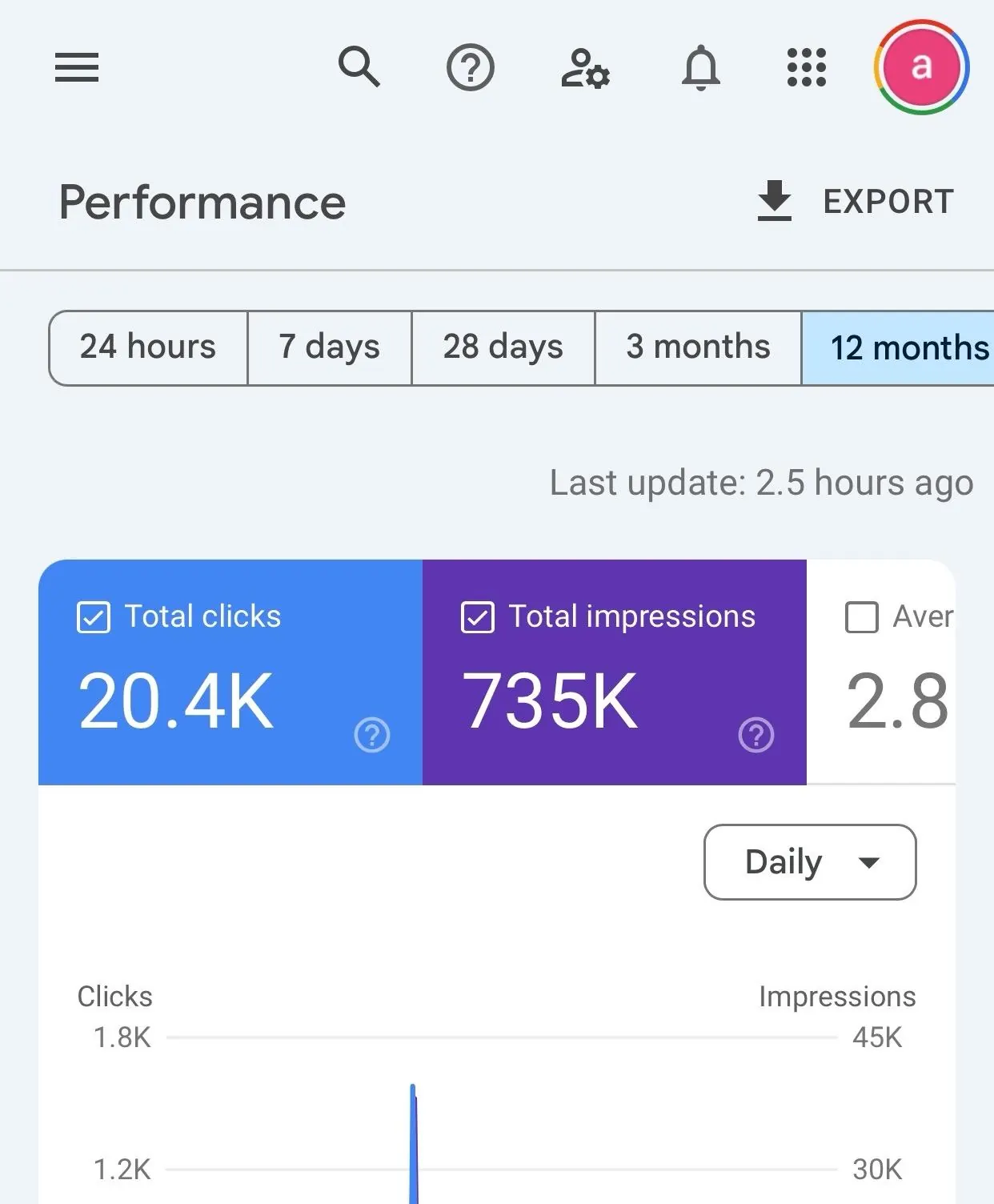
The 12-month Search Console capture records 20.4K clicks and 735K impressions. The portfolio also reports an AI Overview citation. Search Console totals are search metrics, not a count of AI citations or clicks caused by GEO.
Legal Services — SEO & AI Citation Growth
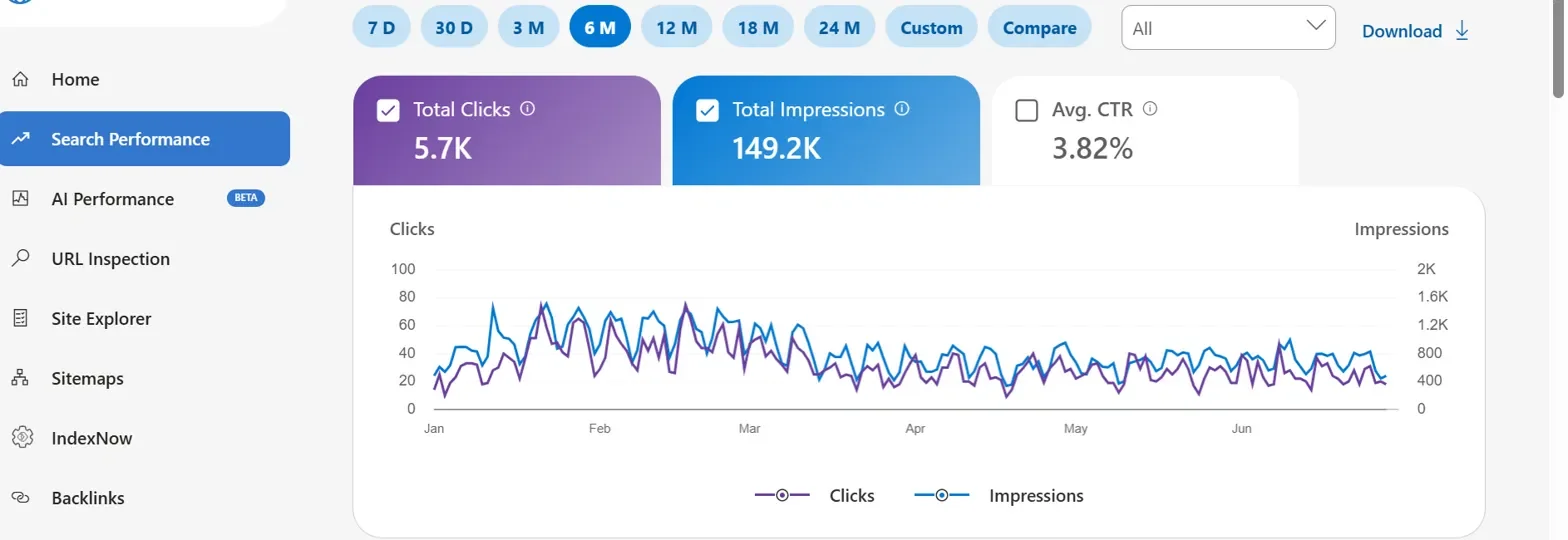
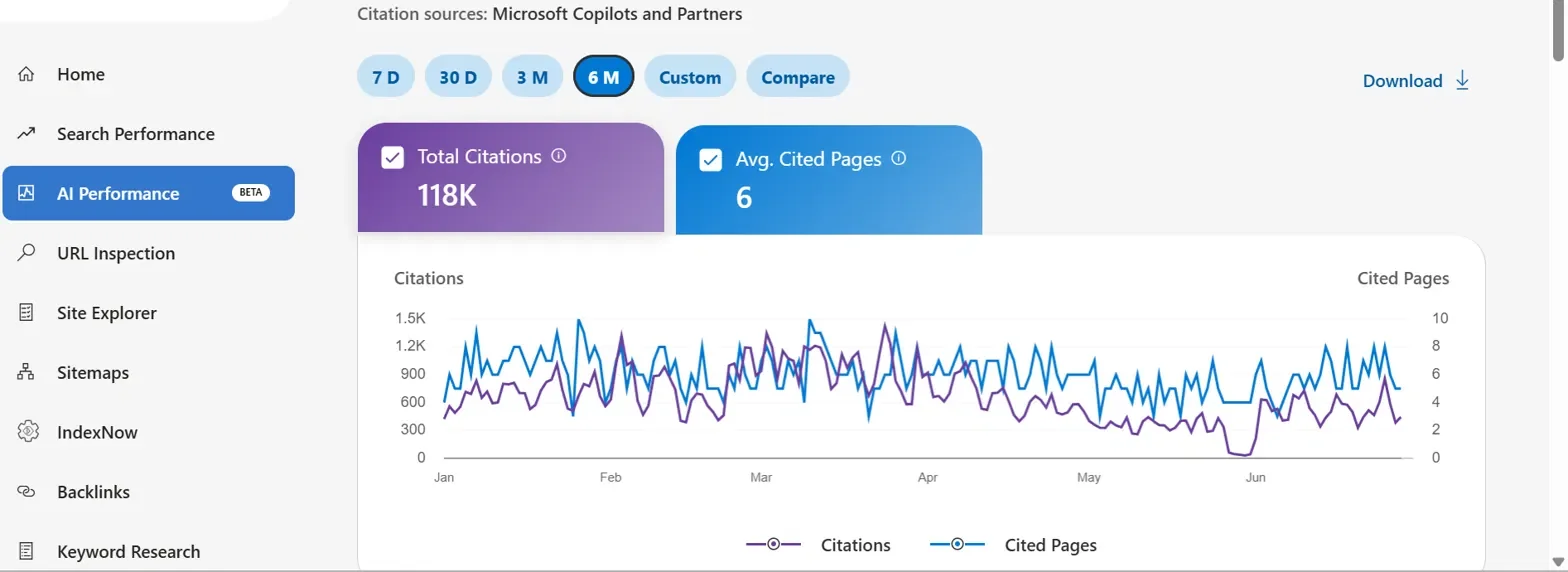
The six-month proof captures show 5.7K Google Search clicks and 149.2K impressions alongside 118K total AI citations and six average cited pages in Microsoft Copilot & Partners. The engagement is listed as nine months; these captures cover six months. The AI count is specific to that reporting surface, not Google AI Overviews or unique visitors.
Healthcare Apparel E-Commerce
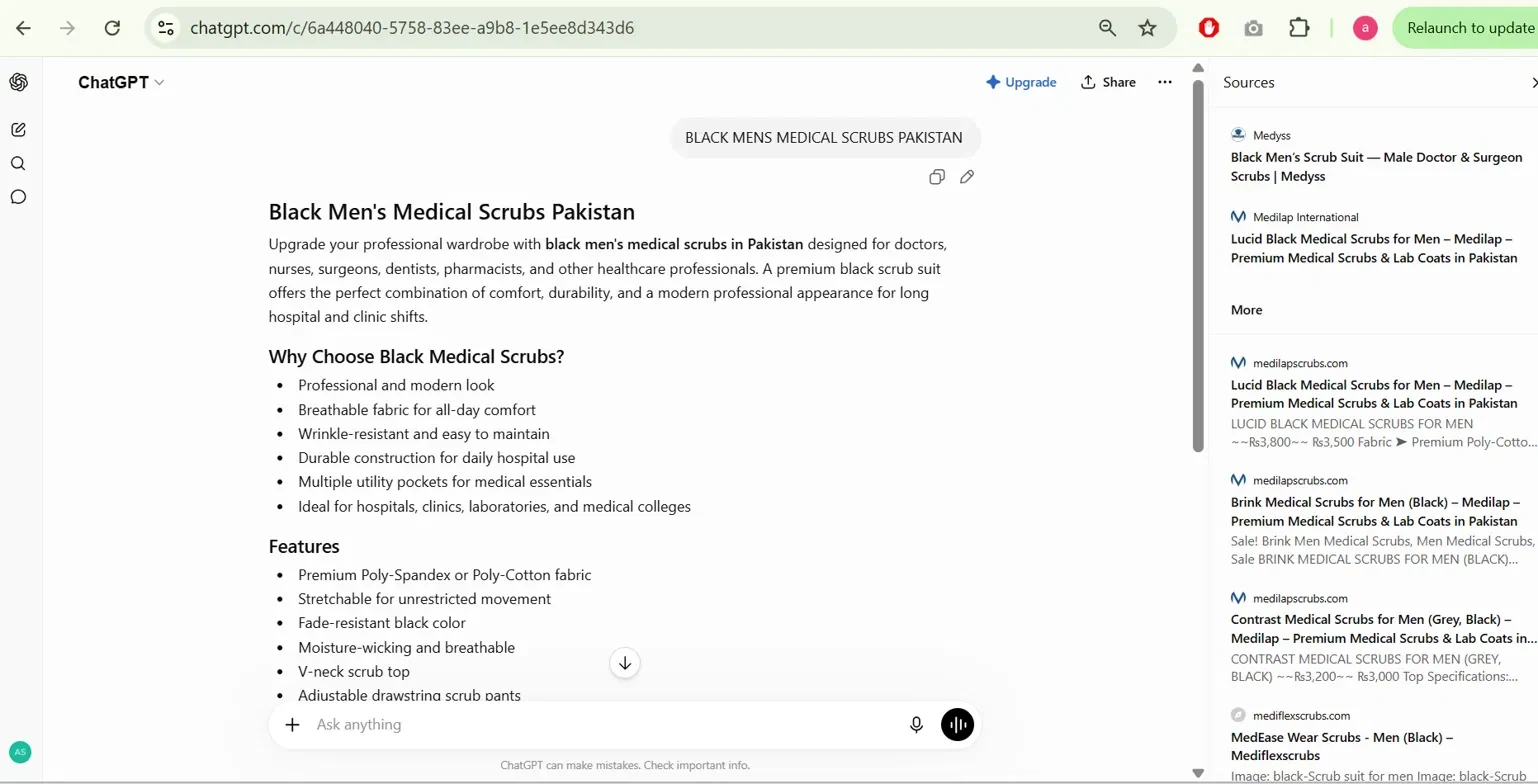
Medyss reports 454 search clicks, 17.7K impressions and 12+ AI-attributed orders over three months. The ChatGPT capture demonstrates a cited result for one product query; the order attribution is reported from WooCommerce tracking, not established by that screenshot alone.
How to measure GEO vs SEO without mixing metrics
Keep separate reporting lanes. Use Search Console for Google Search clicks and impressions, analytics for visits and conversions, and each available AI reporting tool for its own citation metrics. Google includes AI-feature traffic within Search Console’s overall Web reporting; those totals alone do not provide an isolated AI Overview performance breakdown.
For repeatable AI checks, record the platform, prompt, date, cited URL and any relevant session or location conditions. Use a stable set of prompts, but treat the findings as a sample rather than total market visibility. Track AI referral conversions where attribution is available, and disclose missing referrers or uncertain attribution. Never add citation counts to organic clicks or equate mentions with revenue.
Should you invest in GEO or SEO?
If important pages are not indexed, fix SEO fundamentals first. If you already have useful, discoverable pages, extend that work with answer-focused content, stronger evidence and platform-specific AI visibility measurement. For an e-commerce business, prioritize product accuracy and conversion tracking; for legal or healthcare content, prioritize qualified review and clearly sourced claims.
GEO does not replace SEO. Use SEO to build discoverability and GEO to evaluate how your expertise appears in AI answers, then judge both against qualified leads and sales rather than visibility alone.
Discuss your GEO & SEO strategyGEO vs SEO: common questions
Does GEO replace traditional SEO?
No. Google’s AI search features use existing SEO foundations. GEO adds a focus on representation and citations in generated answers rather than replacing crawlability, useful content or conversion optimization.
Can a top-ranking page fail to earn AI citations?
Yes. Ranking and citation selection are different outcomes. AI responses can use multiple sources and vary across prompts, platforms and time; a strong organic position does not guarantee inclusion.
Is AEO the same as GEO?
The terms overlap and usage varies. AEO usually describes optimization for direct answers, including snippets and answer engines; GEO emphasizes generative systems that synthesize responses from sources. Define the platforms and outcomes before commissioning either service.
Can schema guarantee an AI Overview citation?
No. Google requires no special schema for AI features. Relevant markup can describe visible information, but it does not guarantee indexing, rankings or citations.
Sources and methodology
- Google Search Central: AI features and your website — eligibility, technical requirements and Search Console reporting.
- Google Search Central: helpful, reliable, people-first content — quality and trustworthy authorship.
- GEO: Generative Engine Optimization — original research — benchmark-based investigation, not a live-platform guarantee.
Case-study figures and screenshots come from this portfolio’s existing project records. Different reporting windows and platforms are kept separate; no controlled causal uplift is claimed.